

 ₹https://connect.vivaacp.com/supplier/-in-ahilyanagar/-in-balikashram-road/viva-composite-panel-pvt-ltd-acp-sheet-aluminium-composite-panel-supplier-in-balikashram-road-ahilyanagar--59B5fT/articles/acp-cladding-problems-bulging-leakage-fixes--97facf37-7620-4651-a574-6d2d805502b1
Viva Composite Panel Pvt Ltd – ACP Sheet & Aluminium Composite Panel Supplier, Balikashram Road, ahilyanagar
ACP Sheet & Aluminium Composite Panel Supplier in Balikashram Road, Ahilyanagar, Maharashtra
Suman Colony, Borude Mala, Opposite Datta Mandir, Balikashram Road, ahilyanagar, maharashtra - 414003Get in Touch
Viva Composite Panel Pvt Ltd – ACP Sheet & Aluminium Composite Panel Supplier Social Feeds in Balikashram Road, ahilyanagar
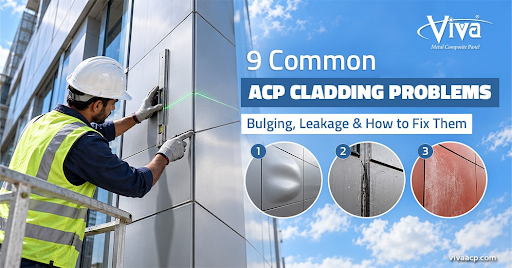
ACP Cladding Problems: Bulging, Leakage & Fixes
Walk down any busy market road in India and you'll spot it: a shopfront where the ACP has started to wave like a sheet of paper, a building with grey streaks running down from every joint, or an elevation that was bright red five years ago and is now a tired pink.
It's easy to blame the material. But when our team goes out to look at these sites, the story is almost always the same. The panel was fixed too tight, the frame wasn't straight, the silicone was the cheapest one on the shelf, or the sheet had a 0.21 mm skin when the job needed 0.5 mm.
Below are the nine most common ACP cladding problems, what actually causes each one, and how to fix them. If you're planning a new facade in Balikashram Road, Ahilyanagar, read it the other way round: every fix here is also something to get right the first time.
Quick Guide to ACP Cladding Problems, Causes and Fixes
1. Bulging or Wavy ACP Panels (Oil-Canning)
This is the problem people ask us about most. From the road, the facade looks like it's rippling, and it gets worse in the afternoon.
Why It Happens
Aluminium expands when it heats up, by roughly 2.4 mm per metre for every 100°C rise. On a dark panel in a Delhi or Nagpur summer, surface temperatures can swing by 40°C or more between night and afternoon. A 2.4-metre panel can grow over 2 mm. If it's screwed down tight with no room to move, it has only one way to go: outwards.
Other causes make it worse:
An uneven or out-of-plumb frame that forces the panel to follow its bumps
Over-tightened screws and rivets that pin the panel instead of holding it
Thin aluminium skins that can't stay flat over a large area
Very large panels with no stiffeners behind them
How to Fix Bulging ACP Cladding
Check the frame first with a straight edge or laser. If the frame is out, no amount of panel work will fix it.
Loosen the fixings and re-fix the panel with slotted holes or clips that let it slide as it expands.
Leave proper expansion gaps at joints, usually 8 to 12 mm depending on the system and panel size.
For large panels, bond aluminium stiffeners on the back.
If the skin is creased, replace that panel. Trying to flatten a creased panel rarely looks right.
Prevention: Specify 4 mm sheets with 0.5 mm skins for exteriors, and insist on a straight, properly designed sub-frame.
2. Water Leakage Through ACP Joints During Monsoon
The first heavy rain tells you whether the joints were done right. Leaks show up as damp patches on inside walls, water behind the cladding or dripping at windows.
Why ACP Cladding Leaks
Wrong silicone: General-purpose or acetic silicone isn't made for outdoor facade joints and cracks within a couple of seasons.
No backer rod: Without it, the silicone sticks to three sides of the joint and tears when the panels move.
Dirty or dusty joints: Silicone applied over dust simply doesn't bond.
Joint design that relies only on sealant: One failed bead is all it takes.
How to Fix ACP Cladding Leakage
Cut out all the old, failed sealant. Don't just run new silicone on top.
Clean the joint and wipe it with a solvent so it's dust and oil free.
Push in a backer rod of the right size so the sealant sticks to two sides only.
Apply a weather-seal silicone meant for facades, and tool it smooth.
Do this in dry weather. Silicone applied in the rain won't cure properly.
If a building keeps leaking every monsoon, it's worth looking at a rainscreen or dry-joint system, which lets water drain out from behind the panels instead of trying to block every drop. We explain how it works in our post on the top reasons to use rainscreen cladding.
3. ACP Colour Fading and Chalking
If you rub your hand on the panel and it comes away with a powdery film, the coating is breaking down.
This is almost always a coating issue. Polyester (PE) coatings are fine indoors, but under Indian UV they fade and chalk, sometimes within three to five years. PVDF coatings are made to hold colour for 15 to 20 years or more outdoors. We go deeper into this in why PE-coated ACP fades on building exteriors.
Fix: There's no cleaning trick that brings faded PE back. Replace the worst-affected panels with PVDF-coated ones in a matching shade. If the whole facade has faded, it's usually cheaper long-term to replace it than to keep patching.
4. ACP Delamination (Aluminium Skin Peeling Off the Core)
You'll see the aluminium skin lifting at an edge or a bubble forming in the middle of a panel.
Delamination usually points to a factory bonding problem or a cheap core. It can also happen when cut edges are left open and water creeps in over years.
Fix: Replace the affected panels and make sure all exposed edges are folded or sealed. Good-quality ACP with a properly bonded core very rarely delaminates.
5. Black Streaks Below ACP Joints
Those dark vertical lines under every joint are one of the most common complaints on light-coloured facades. Some low-grade silicones bleed oil that attracts dust, and rainwater running off the joint carries that dirt down the face.
Fix: Clean with a mild detergent and soft cloth (never abrasive pads). When re-sealing, use a non-staining weather silicone. For regular care, see our ACP facade cleaning tips.
6. Loose or Rattling ACP Panels
Panels that rattle in the wind, or worse, come loose during a storm, are a safety issue, not just a cosmetic one. In cyclone-prone coastal areas this needs urgent attention.
Causes: Too few fixings, brackets that aren't anchored properly into the structure, or a frame that wasn't designed for local wind loads.
Fix: Get the fixing pattern checked against wind load, add fixings where needed, and replace any corroded brackets. Taller buildings should have this designed by a structural or facade consultant.
7. Rust Stains on ACP Cladding
ACP doesn't rust, but the frame behind it can. Plain mild steel frames and ordinary screws rust quickly, especially near the coast, and the rust runs out through the joints.
Fix: Replace rusted fasteners with stainless steel ones, and treat or replace the corroded frame members. For new work, use galvanised steel or aluminium sub-frames.
8. Protective Film Baked Onto ACP Panels
This one is surprisingly common on Indian sites. The protective film is left on for months while other work goes on, the sun bakes it on, and peeling it later leaves glue patches or tears into pieces.
Fix: Soften the residue with a cleaner recommended by the manufacturer and remove it slowly. Never scrape with blades.
Prevention: Remove the film as soon as the panels are installed, and in any case within the time limit your supplier recommends.
9. Uneven ACP Joints and Gaps
Joints that wander, gaps that change width from panel to panel, and corners that don't meet. It doesn't leak, but it makes an expensive facade look cheap.
This usually comes from starting work without proper shop drawings or setting-out.
Fix: Re-align the worst panels.
Prevention: Insist on a panel layout drawing before fabrication. Our ACP installation guide explains the right sequence.
How to Avoid ACP Cladding Problems Before They Start
Almost every fix above is cheaper to get right at the start. Before work begins, check these with your contractor:
4 mm sheets with 0.5 mm aluminium skins for exteriors
PVDF coating for anything outdoors
A straight, properly anchored galvanised steel or aluminium frame
Expansion gaps and slotted fixings shown on the drawings
Facade-grade, non-staining weather silicone with backer rod
Stainless steel fasteners, especially in coastal cities
Protective film removed right after installation
A written warranty from both the sheet supplier and the installer
When to Call an ACP Cladding Professional
Small issues like streaks or a single re-seal can be handled by a good local contractor. Bring in the manufacturer or a facade consultant if you see panels coming loose, leaks that return every monsoon, bulging across many panels or delamination. These usually point to a design or material problem that patch repairs won't solve.
If you're facing ACP cladding problems at your property in Balikashram Road or anywhere in Ahilyanagar, getting the cause identified early can help avoid more extensive facade repairs later.
Facing one of these problems on your building? Share a few photos and your location through our Viva ACP enquiry form, and the Viva technical team will help you work out the cause and the right fix.
Frequently Asked Questions About ACP Cladding Problems
Why Is My ACP Cladding Bulging?
Bulging, often called oil-canning, usually happens because the panel has no room to expand in the heat. Aluminium grows about 2.4 mm per metre for every 100°C rise, so a large panel fixed too tightly, or mounted on an uneven frame, starts to wave once summer temperatures hit. Thin skins, missing stiffeners and over-tightened screws make it worse.
How Do I Stop Water Leaking Through ACP Joints During Monsoon?
Most leaks come from failed silicone joints. Clean the joint, remove the old sealant, insert a backer rod, then apply a weather-grade structural or weather-seal silicone with the right joint depth. If leaks keep coming back, the better fix is a rainscreen or dry-joint system that drains water instead of relying on sealant alone.
Why Is My ACP Sheet Colour Fading?
Fading is almost always a coating problem. Polyester (PE) coatings break down under strong Indian sun, often within a few years. PVDF-coated sheets hold their colour for 15 to 20 years or more. Once a PE coating has faded, the only real fix is to replace the panel or re-coat it.
Can a Bulged ACP Panel Be Repaired, or Does It Need Replacing?
If the panel itself isn't creased, it can often be fixed by loosening the fixings, correcting the frame and re-fixing it with proper expansion gaps. If the skin is creased, dented or delaminated, replacing that panel is quicker and looks better than trying to flatten it.
What Causes ACP Sheets to Delaminate?
Delamination is when the aluminium skin peels away from the core. It usually points to poor bonding at the factory, a low-quality core, or water getting into the cut edges over a long time. Good-quality sheets with properly sealed edges rarely delaminate.
Why Does My ACP Cladding Have Black Streaks Below the Joints?
Those dark lines are usually dirt that sticks to sealant that is bleeding oil, or water running off the joints and carrying dust down the panel. Using a non-staining weather silicone and regular washing will stop most of it.
How Long Should ACP Cladding Last Without Problems?
A well-installed, PVDF-coated ACP facade should last 20 to 25 years or more with basic cleaning. Most problems people see in the first few years trace back to installation shortcuts or low-grade sheets, not to ACP itself.